What Is a European Christmas Market? A First-Timer’s Guide
Your first Christmas market can feel wonderfully simple once you know what to expect, from the mugs and food to the rhythm of day and night.
At a Glance
- Entry
- Usually free
- Drinks
- Glühwein + Kinderpunsch
- Mugs
- Keep or return
- Best Rhythm
- See it day + night
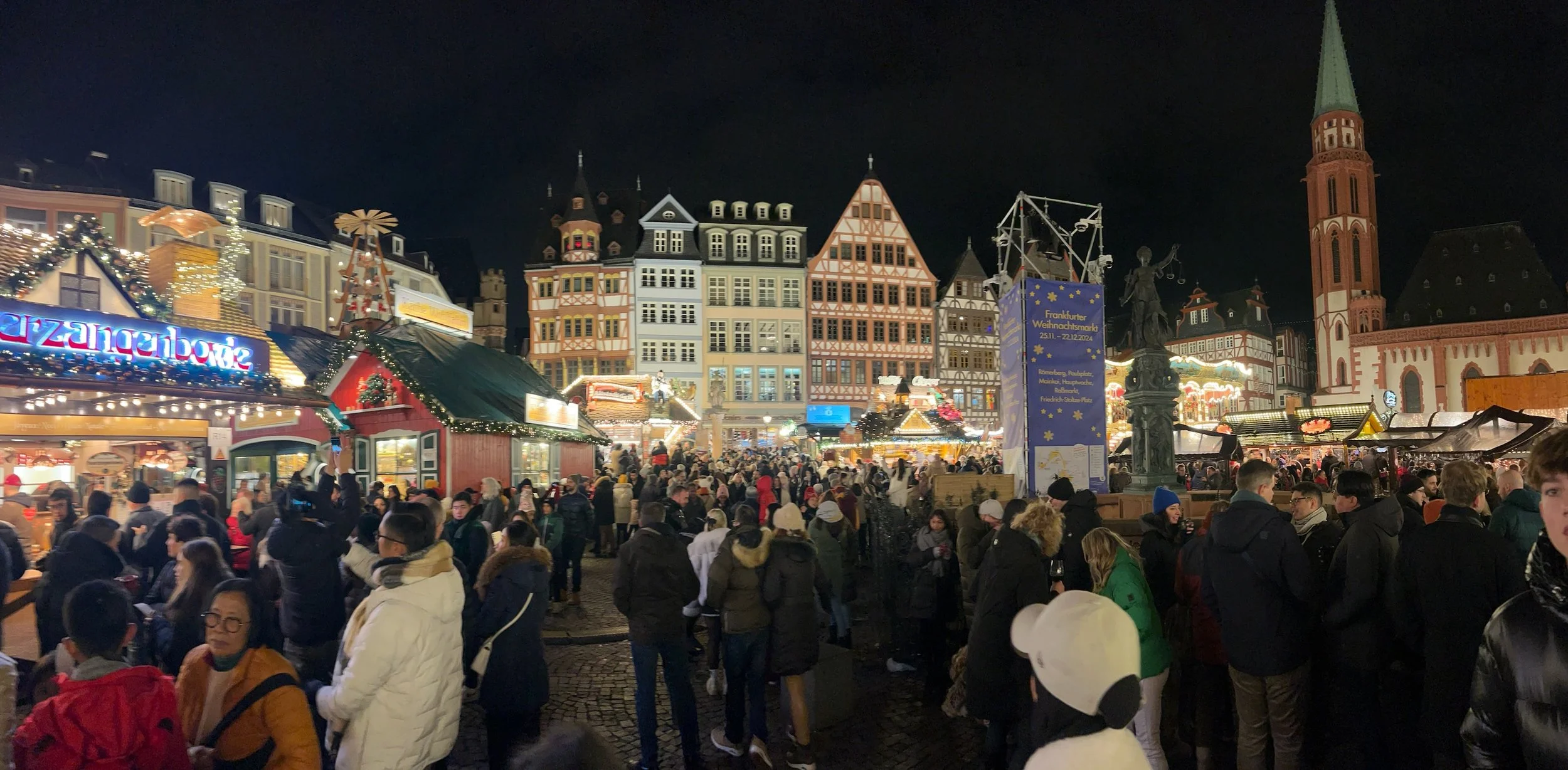
Before our first Christmas market trip, we knew what the pictures looked like: glowing wooden stalls, mugs of something warm, twinkle lights strung across old European squares. What we weren’t prepared for was how it would feel to actually step into one.
There is so much happening at once. You might be standing beneath the towers of a cathedral that has watched over the city for hundreds of years, surrounded by traditions that stretch back centuries, while conversations in different languages move all around you. Lights spill across the square. Music drifts between the stalls. The air smells like spiced Glühwein, hot cider, roasting nuts and something wonderful you haven’t figured out how to pronounce yet.
People are laughing, eating, meeting friends after work, carrying steaming mugs and wandering from stall to stall. Everywhere you turn, there is something you haven’t seen before.
For us, that first experience was a rush of Where do we look first? What should we try? Is there really another market around the corner? And there usually was.
That is the part photographs don’t quite capture. A European Christmas market isn’t simply a pretty place to shop. It is something you step into, part celebration, part gathering place, part centuries-old tradition, and for a few hours, you get to be right in the middle of it.
After visiting more than 45 Christmas markets across four countries, we’ve learned how they work, what makes each one different, and a few things we wish someone had explained before our first trip. So if you’re wondering what you actually do at a Christmas market, whether you need tickets, what everyone is drinking from those little mugs, or why one city seems to have five different markets, you’re in the right place.
A centuries-old tradition
Part of what makes a European Christmas market feel so different is that it isn’t something created just for visitors. These markets grew out of winter and Advent traditions that have been part of European life for centuries. Town squares became gathering places where people could buy seasonal goods, warm food and drinks, and spend time together during the darkest weeks of the year.
And many still unfold in those same kinds of places today. You step into a square surrounded by old buildings, church towers and narrow streets, and suddenly the Christmas market doesn’t feel like something that was set up there. It feels as though it belongs there.
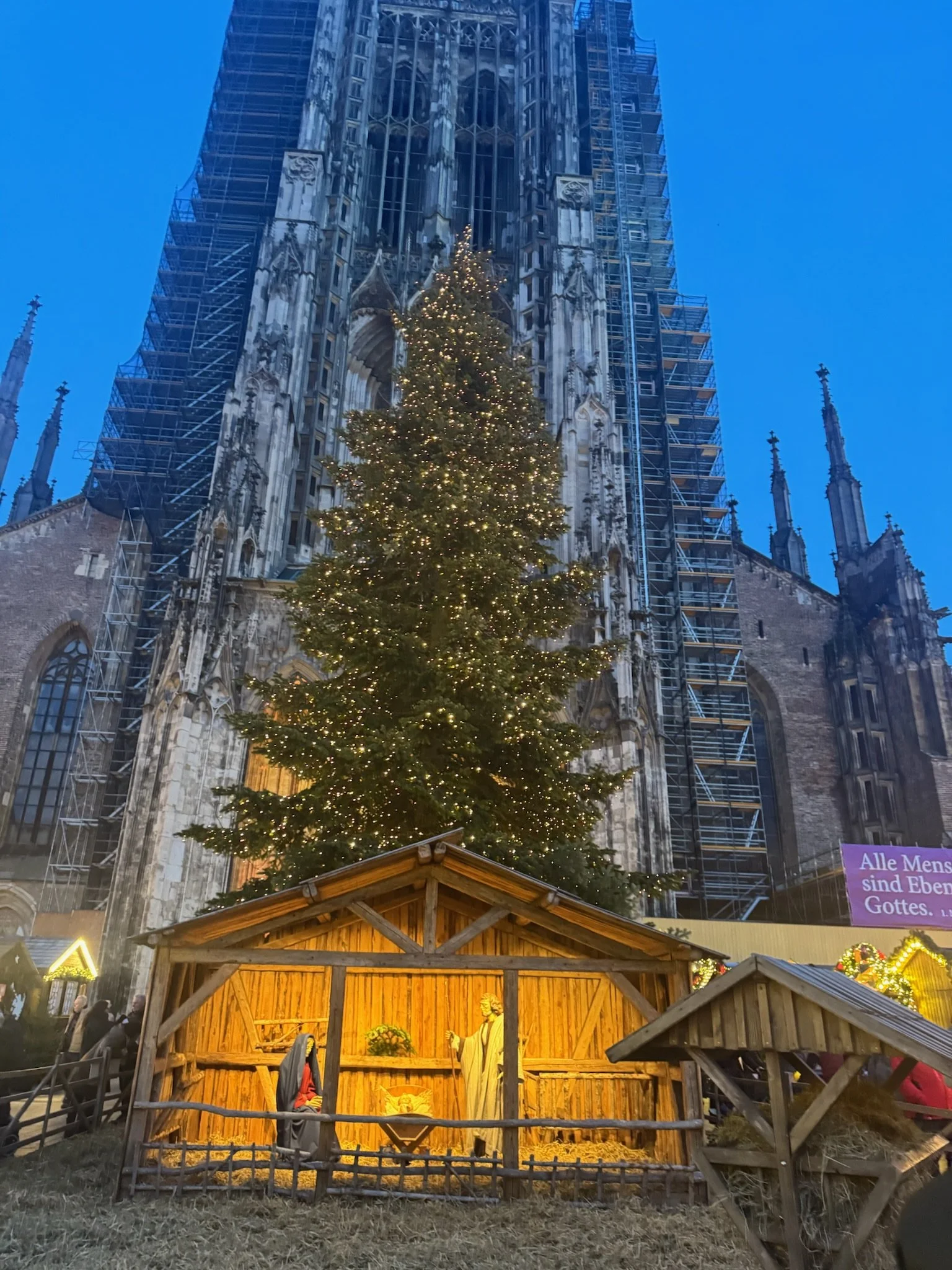
That was one of the biggest surprises for us. We expected beautiful decorations. We didn’t expect the setting itself to become such a huge part of the experience.
One minute you’re looking at a row of wooden stalls glowing under strings of lights. The next, you look up and realize there is a cathedral towering over you that has stood there for hundreds of years.
Then the church bells ring.
Someone nearby is speaking German. Another family passes speaking French. A vendor is handing over steaming cups of Glühwein. Somewhere farther down the square, you can hear music. It is old and lively at the same time.
And no two markets feel exactly alike. Some are grand and busy, filling a famous city square. Others are tucked into courtyards, beside churches or along narrow streets. One market may feel traditional and rustic, while another a few blocks away is filled with elaborate lights, themed stalls or an entirely different atmosphere.
That is why visiting several markets in one city never felt repetitive to us. You aren’t simply seeing the same Christmas market again. You’re discovering another little version of the city.
Yes, you really just walk in
One of the first things we wondered was whether Christmas markets worked like ticketed holiday events at home. Most of the time, they don’t. You simply walk in.
No reservation
No timed entry
No complicated plan required
You can wander through for twenty minutes or stay for hours. Stop for something to eat. Listen to the music. Browse the stalls. Warm up with a drink. Leave, explore another part of the city, and come back later when the lights are glowing.
That freedom is one of the reasons Christmas markets are so easy to build into a trip. You don’t have to organize your entire day around them. They become part of the day.
We often found ourselves passing through a market on the way somewhere else, stopping for a snack, discovering a stall we hadn’t noticed before, and somehow ending up there much longer than planned.
There are exceptions, of course. Some special attractions, performances or individual events may require tickets, so it is always worth checking the official market website before you go.
But for the market itself? Most of the time, you just show up. And start wandering.
Glühwein, Kinderpunsch & the mug you might keep
One of the things you notice almost immediately at a Christmas market is that everyone seems to be carrying a little ceramic mug. That mug is part of the experience.
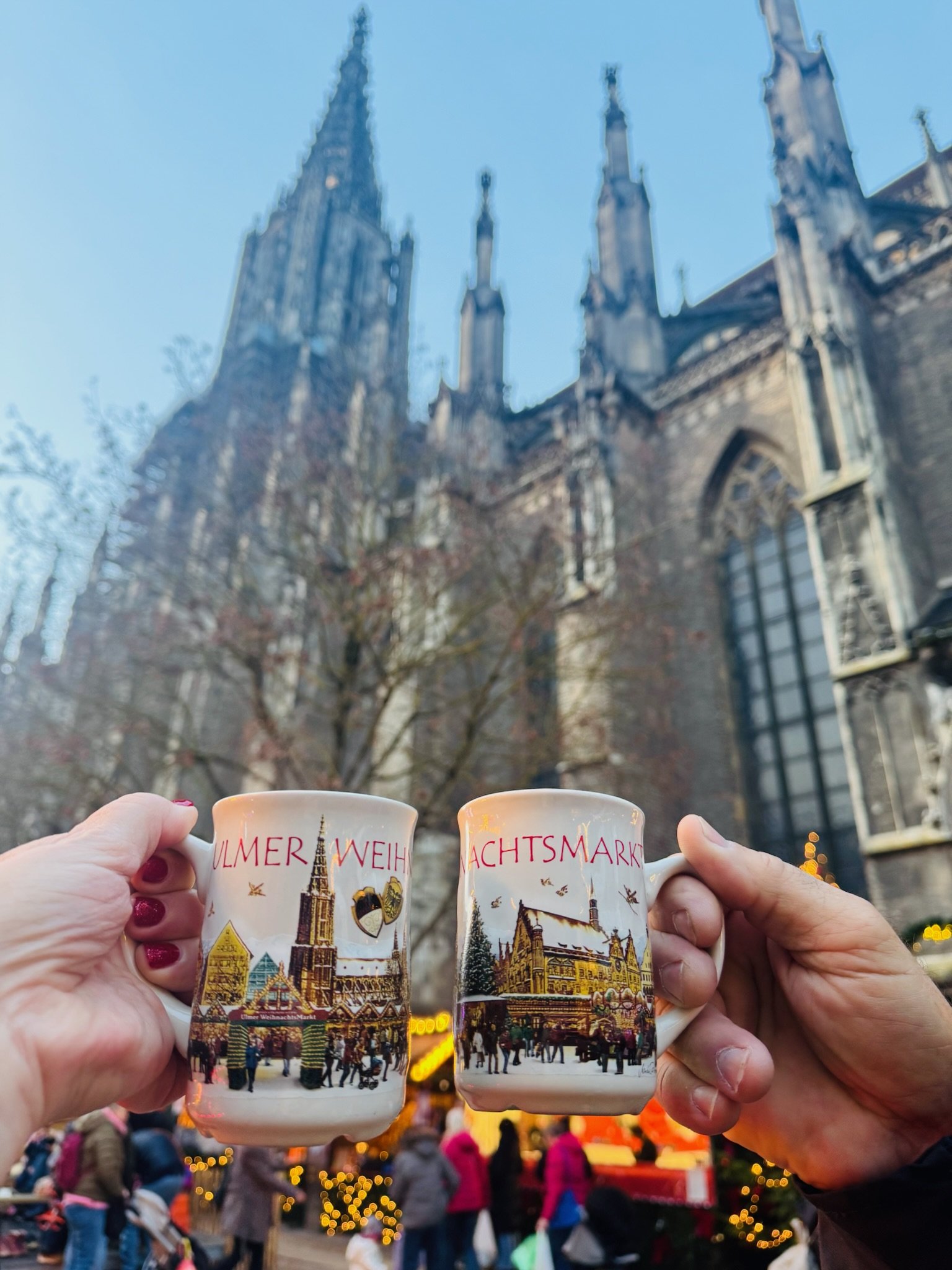
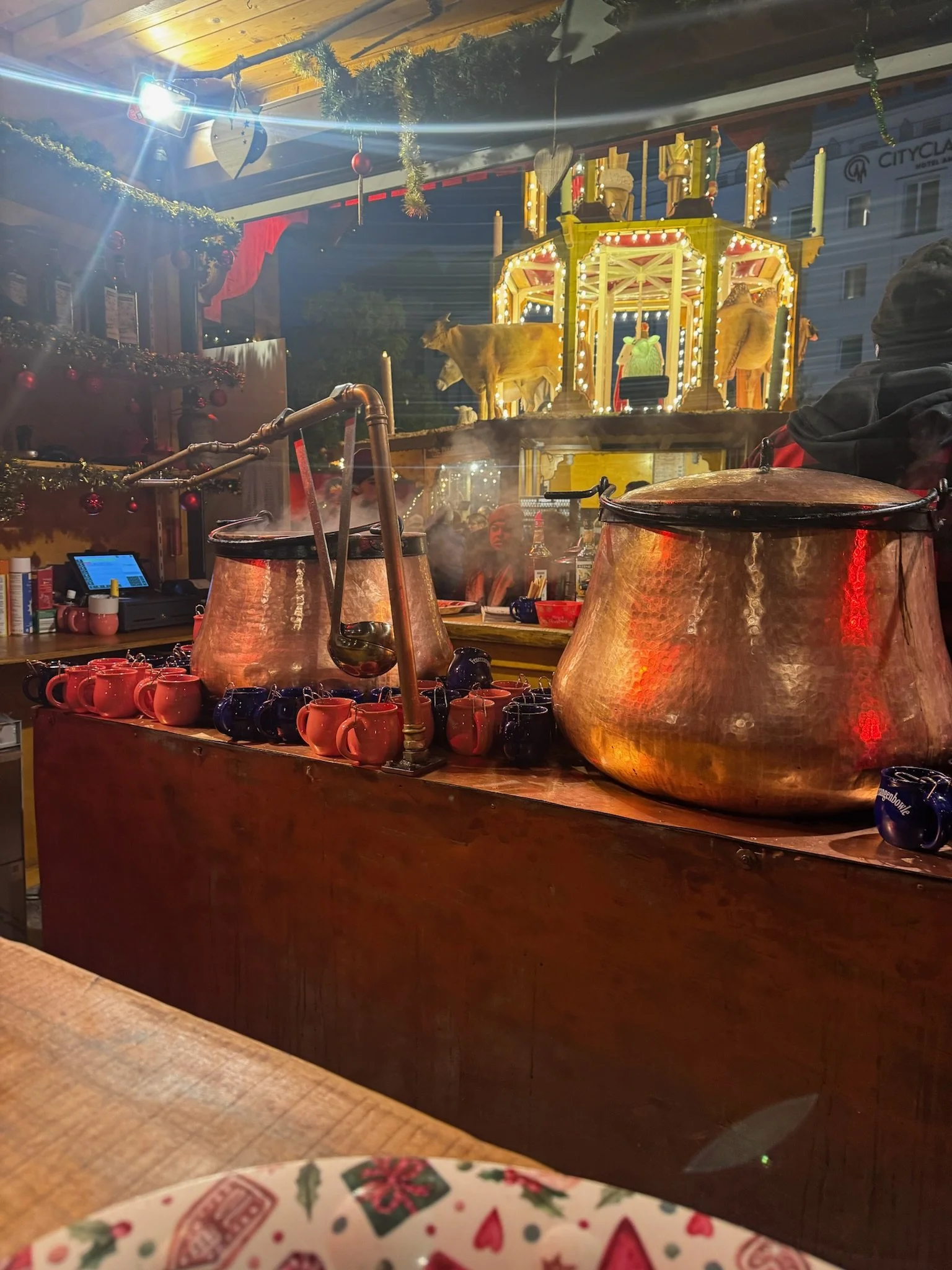
Order a Glühwein, warm spiced wine, and you’ll usually pay for the drink plus a small deposit for the mug. When you’re finished, you can return the mug and get the deposit back. Or you can keep the mug and let the market keep your deposit.
This is where things can get dangerous. The mugs often change by city, market, and year, which makes them feel less like drinkware and more like tiny souvenirs from the trip. Some are shaped like boots, hearts, little houses, or traditional steins. Others are printed with the market name, skyline, or year.
We started keeping a few. Then a few more.
We now have 36. So yes, apparently we collect Christmas market mugs.
Tip
Decide on the first night whether you’re a mug-keeper. It’s easier on the suitcase to know early, and the deposit is usually a few euros.
Good to know
If alcohol isn’t your thing, you’re not left out. Most markets also serve nonalcoholic options like Kinderpunsch, hot apple drinks, tea, cocoa, or warm spiced cider.
And honestly, standing outside in the cold with both hands wrapped around something warm is half the pleasure.
Come hungry
Christmas markets are not just about shopping. A huge part of the experience is eating your way through them.
You’ll find bratwurst sizzling on grills, roasted nuts, potato pancakes, waffles, pastries, sausages, soups and regional specialties that change from city to city.
The very first thing we tried at a Christmas market was a little paper bag of roasted chestnuts. And yes, the song immediately started playing in our heads.
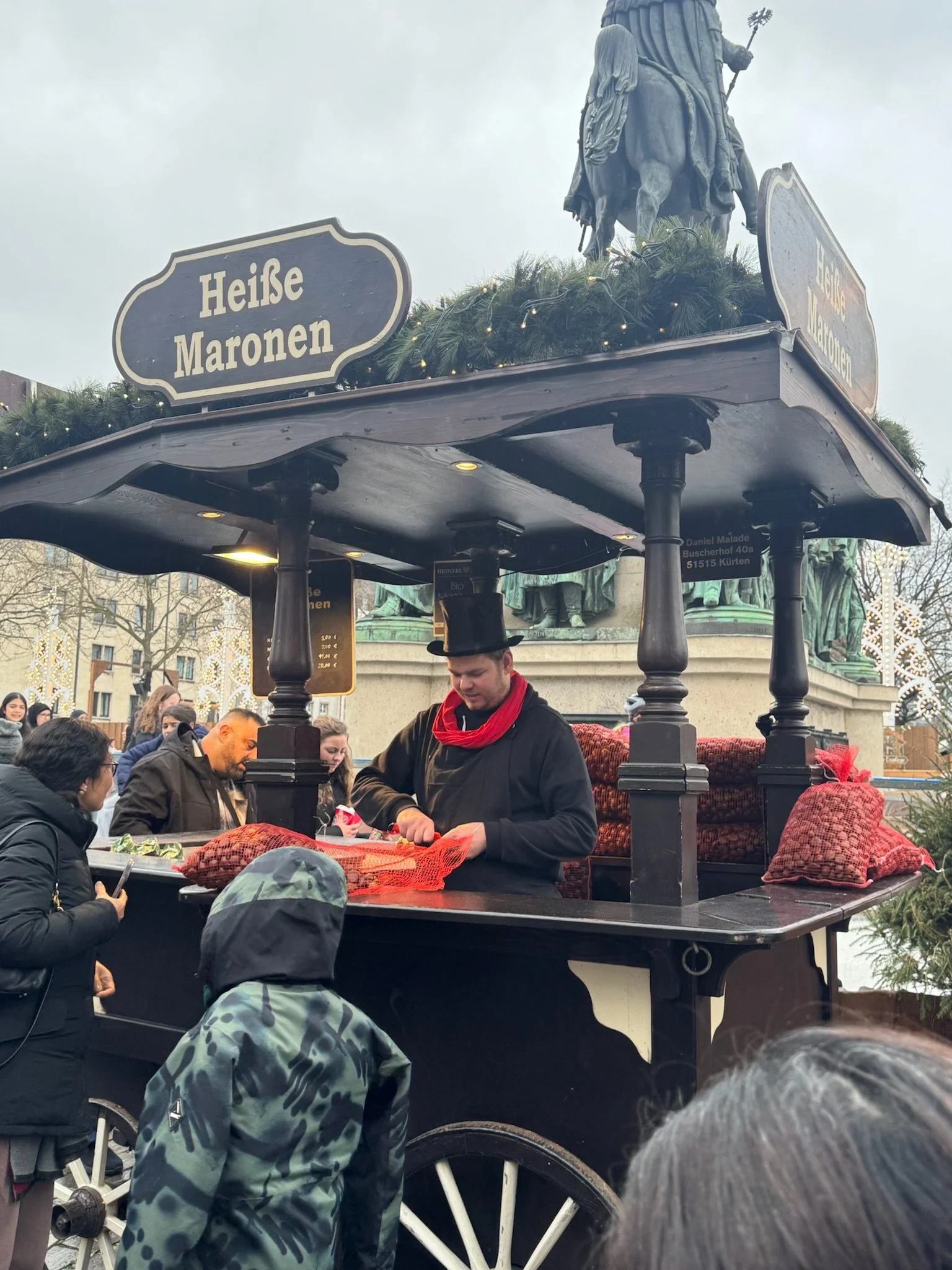
I’m not sure what I expected roasted chestnuts to taste like, but they surprised us. They were warm, soft and a little chewy, completely different from the crunchy roasted nuts we were used to. That became part of the fun for us: trying something because we had seen it before, heard about it before, or simply had no idea what it was.
Then there are the potato pancakes. Hot, crispy, golden and usually served with applesauce or another traditional topping. We learned quickly that they do not need ketchup.
And save room for the sweet side of the market too. Warm waffles, pastries, gingerbread, chocolate-covered fruit and all kinds of regional treats have a way of appearing just when you thought you were finished eating.
The food is not really a break from the Christmas market. It is part of the Christmas market.
You stand at a tall table with something warm in your hands, people stream past, music is playing somewhere nearby, and before long you’re chatting with locals or fellow travelers who happen to be sharing the table with you. That is one of the things we love most.
There is such a happy energy at Christmas markets. People are meeting friends, laughing, trying something warm, admiring the lights and soaking up the season together. Even when you don’t speak the same language, there is often this wonderfully easy sense that everyone is there for the same reason: to enjoy Christmas for a little while.
Day and night feel completely different
One of the things we learned quickly is that a Christmas market can feel like two different places depending on when you visit.
During the day, everything is easier to see. You notice the details on the wooden stalls, the ornaments, the food displays and the architecture around you. It is usually a little easier to browse, talk with vendors, take photos and really see what makes each market unique.
Then evening arrives. The lights come on.
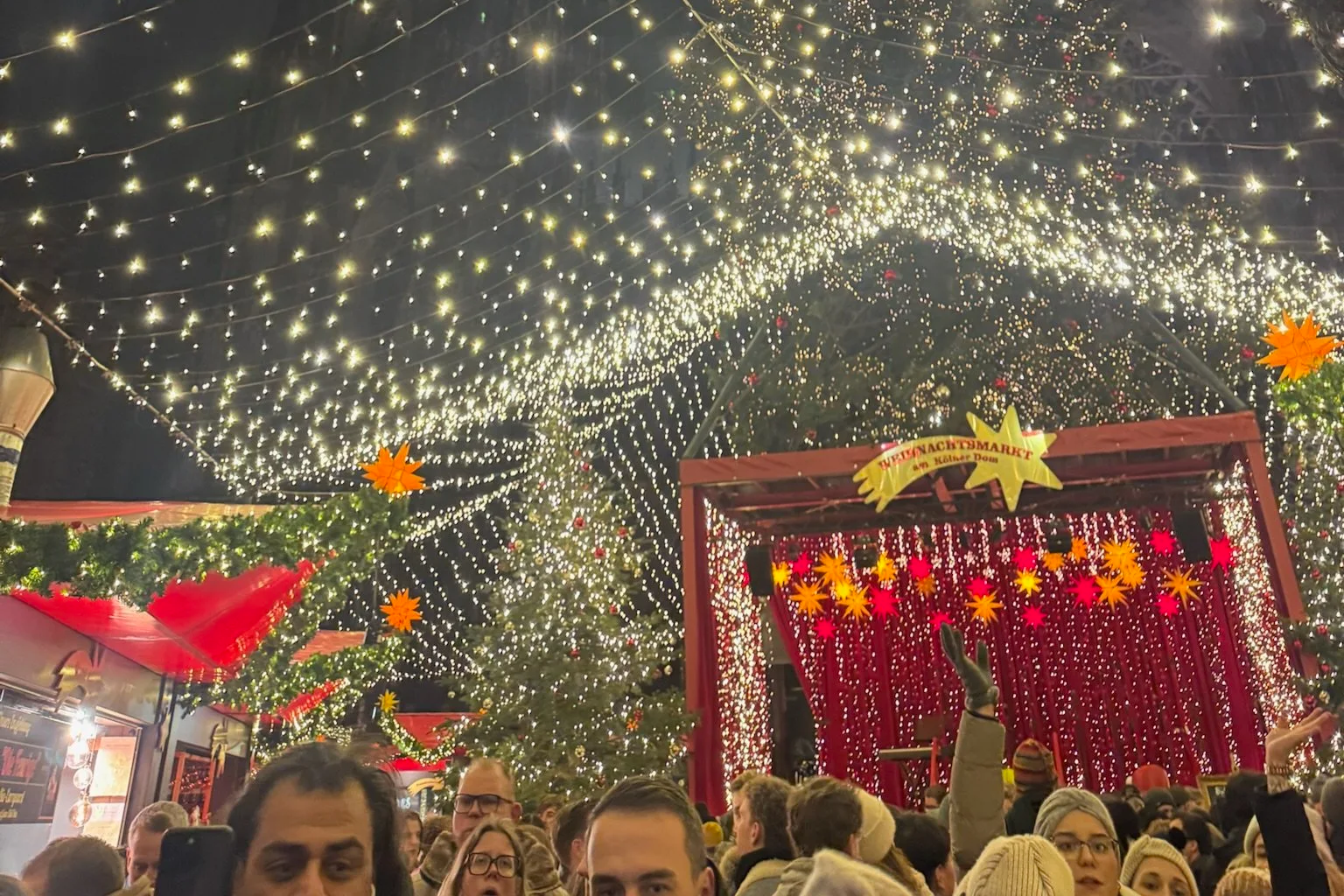
The square gets busier. Music seems louder. Steam rises from the food stalls. Glühwein mugs are everywhere. The cathedral, town hall or old buildings around the market suddenly become part of the backdrop in a completely different way. And the whole place feels more alive.
We love both.
Daytime is when we tend to notice the little things. Nighttime is when the atmosphere really takes over.
If we have enough time in a city, we like to experience a favorite market both ways, once while there is still daylight and again after dark. It is amazing how different the same stalls can feel just a few hours later.
And if you only have time for one?
For us, evening usually wins. There is just something about standing in a centuries-old square under thousands of lights, holding something warm in your hands, while the whole city seems to be glowing around you.
Why it feels so different
A Christmas market can look beautiful in photos. But being there is different.
Part of it is the setting. You are not walking into a holiday event built in a parking lot or convention space. You are stepping into the center of a living city, often surrounded by buildings that have been there for centuries.
Part of it is the tradition. These markets are not just something visitors come to see. Locals meet friends there after work. Families stop by for something warm to eat. People gather in the square, talk, laugh and linger.
And part of it is simply the atmosphere. The cold air. The lights. The music. The smell of Glühwein, cinnamon, cloves and all those warm spices that somehow smell like your perfect Christmas dream. The roasted nuts. The sound of different languages all around you. The church bells. The old streets leading from one market to the next.
It all layers together.
There were so many moments on our first trip when we just looked at each other like, can you believe we are really here?
That feeling never completely went away. Even after visiting dozens of markets, we still have those moments when we turn a corner, see a square glowing ahead of us, and feel that little rush all over again.
Maybe that is why Christmas markets stay with people. They are beautiful, yes. But more than that, they make you feel completely present in a place and a season.
For a little while, you are not rushing to the next thing.
You are just there.
And Christmas is happening all around you.
So how do you actually plan a Christmas market trip?
Once you understand how Christmas markets work, planning a trip starts to feel much less intimidating. You do not need to visit ten cities or race from market to market. In fact, we think the experience is better when you give yourself enough time to settle into a place, wander without a strict schedule, and return to a favorite market more than once.
Where to start
For a first Christmas market trip, we think Frankfurt is one of the easiest places to begin. It is a major international gateway with direct flights from many airport hubs, and it works beautifully as both an arrival and departure point. Once you land, Germany’s rail system makes it easy to move between cities without needing a car.
That is exactly why we built our first route around it. Our 10-day Route No. 01 takes you through Cologne, Ulm and Frankfurt, with easy rail days, comfortable hotel bases and Christmas markets already mapped out along the way.
We have done the planning for you.
Where to stay.
How long to spend in each base.
Which markets to visit.
How the train days fit together.
And even what to wear so you can stay warm without packing your entire closet.
Planning the rest
Of course, wherever you begin, always check the official market websites before you go.
Keep in mind
Dates can change from year to year. Some markets close before Christmas while others continue beyond it. Opening hours, special events and individual locations can vary too.
We also like to think about the trip in layers.
Where do we want to stay?
Which markets are must-sees?
Are there easy day trips nearby?
And where can we leave enough breathing room to simply wander?
That last part matters more than we expected. Some of our favorite memories were not planned at all. They happened because we had time to follow a street that looked interesting, stop for another warm drink, or discover a market we had not even realized was there.
So if this is your first Christmas market trip, you do not have to figure everything out from scratch.
Start with Route No. 01. Pack warmly. Leave a little room in the schedule. And go.
Because once the planning is done, the best part is what happens after you arrive.
You walk into the square.
You smell the cinnamon and cloves.
You hear the music.
You look at each other and think:
We’re really here.
A European Christmas market isn’t simply a pretty place to shop. It is something you step into.
Send me the Winter Edition.
The Carry-On Blueprint — what we actually pack for a week of Christmas markets.
See our Privacy & Cookies.